
Faster Launch
Modern development workflows help move your product from idea to market efficiently.
Tantsoft builds modern Android, iOS, Flutter, and React Native applications combining premium UI, scalable architecture, reliable performance, and business-focused functionality.
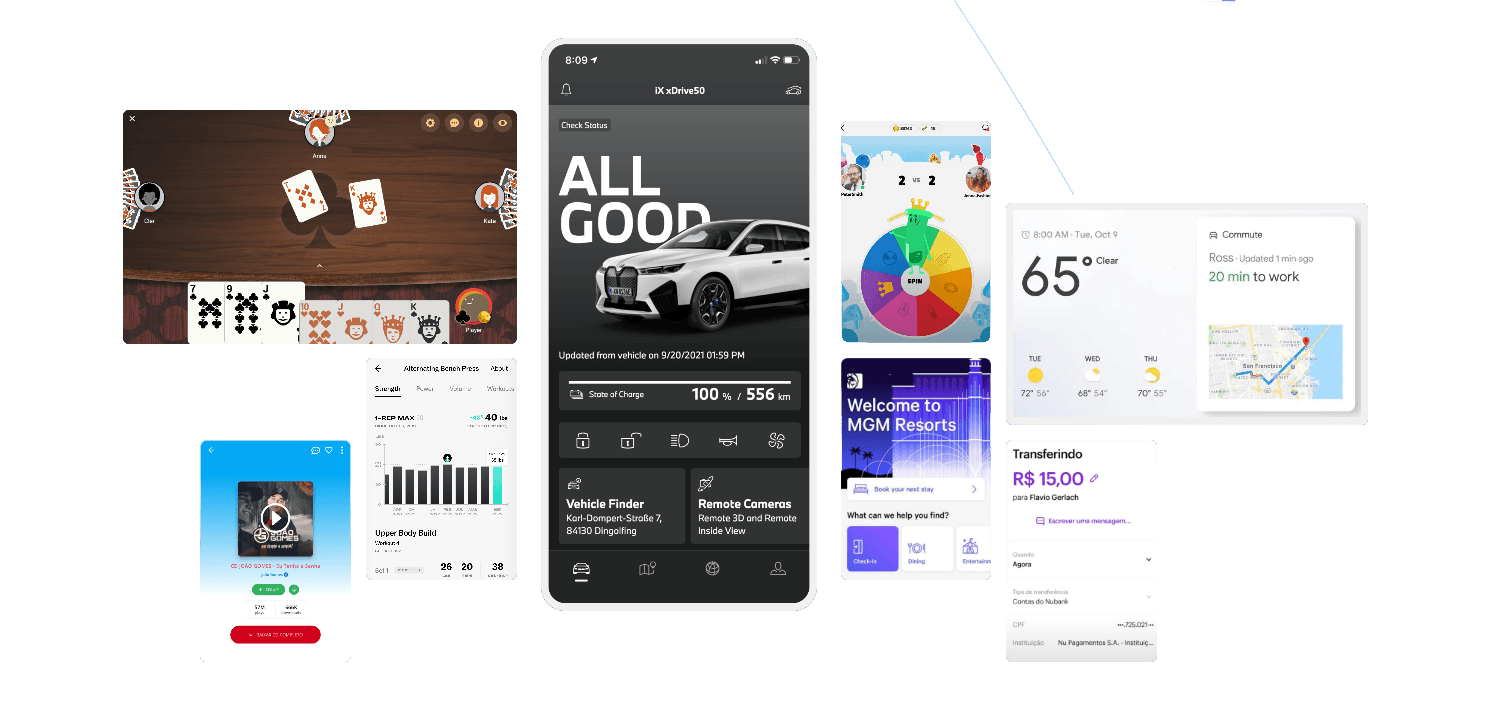
Product Delivery
Built to Scale
Modern development workflows help move your product from idea to market efficiently.
Applications built with security, reliability, and responsible data handling in mind.
Flexible backend architecture prepared for integrations, traffic, and future product growth.
Continue improving your product with maintenance, monitoring, and future feature development.

Premium product experience
Designed Around Your Users
We combine interface design, application architecture, backend engineering, and product thinking to create mobile applications that feel polished and perform reliably.
From early MVPs to larger business applications, our goal is to build a strong foundation that can support your users and future product growth.
Premium UI and product-level mobile experiences
Business-ready Android and iOS development
Cross-platform development for faster launch cycles
Scalable backend integration and API connectivity
Performance, security, and maintainable architecture
Post-launch optimization and maintenance support
From product strategy and design to development, integrations, testing, deployment, and support.
We design and develop premium mobile products with modern architecture, intuitive UX, and functionality built around your business goals.
High-performance Android applications with polished interfaces, scalable backend connectivity, and maintainable code architecture.
Refined iPhone and iPad experiences designed around smooth performance, elegant user journeys, and reliable functionality.
Launch on Android and iOS faster with a shared codebase while maintaining a consistent and premium product experience.
Modern cross-platform development using Flutter and React Native for faster delivery, maintainable code, and long-term scalability.
Security-conscious architecture covering authentication, API protection, data handling, application reliability, and infrastructure.
We select technology based on the actual requirements of your product rather than forcing every application into the same stack.
Build visually rich applications with one codebase, flexible interfaces, smooth interactions, and consistent cross-platform behavior.
Create scalable Android and iOS applications using modern React-based development workflows and reusable architecture.
Connect your application with secure APIs, cloud services, databases, analytics, payments, notifications, and business systems.
Reach your audience across Android and iOS with the development approach that best fits your business and technical goals.
Build Android applications designed around strong performance, intuitive navigation, business functionality, and scalable integrations.
Create polished iOS experiences with clear user journeys, dependable backend communication, and premium interface quality.
Use Flutter or React Native to efficiently deliver a consistent mobile product across Android and iOS.
A structured development process reduces uncertainty and keeps product, design, engineering, and business goals aligned.
We study your market, users, product goals, business model, and feature priorities to define the right product roadmap.
We transform product requirements into clean user flows and modern interfaces designed around usability and engagement.
We define the technology stack, database structure, APIs, integrations, user roles, and scalability requirements.
Our development team turns the approved design into a functional Android, iOS, Flutter, or React Native application.
We test usability, responsiveness, performance, device compatibility, security, stability, and critical application flows.
After deployment, we can support monitoring, analytics, maintenance, optimization, and future feature development.
Development cost depends on features, number of user roles, application complexity, UI/UX requirements, backend architecture, supported platforms, integrations, security, and timeline.
A focused MVP will usually require less development work than a large application containing advanced automation, dashboards, payments, messaging, or complex integrations.
Get a Project EstimateA successful app continues evolving after launch. Tantsoft can support bug fixing, performance optimization, platform updates, analytics, infrastructure, and new feature development.
The right mobile application can improve accessibility, customer engagement, internal operations, communication, and digital service delivery.
Discuss Your ProductCreate a direct, convenient channel between your users and your business.
Use digital products to support acquisition, service delivery, retention, and revenue.
Automate workflows, improve data access, and reduce repetitive manual processes.
Give users access to your products and services from almost anywhere.
Common questions about Android, iOS, Flutter, React Native, development costs, and application delivery.
A mobile app development company can handle product strategy, UI/UX design, Android and iOS development, cross-platform implementation, backend integration, testing, deployment, and post-launch maintenance.
Yes. Tantsoft develops custom Android applications for startups, SMEs, and businesses with scalable functionality, secure architecture, backend integration, and performance-focused engineering.
Yes. Our iOS app development services focus on polished user interfaces, smooth navigation, reliable backend connectivity, application performance, and long-term maintainability.
Cross-platform development can be a strong choice when you want to reach Android and iOS users efficiently while maintaining a consistent product experience and reducing duplicated development work.
Both can be excellent choices. Flutter offers strong UI flexibility and consistent rendering, while React Native works especially well for teams using the React ecosystem. The right choice depends on your product requirements and technical goals.
Mobile app development cost depends on application complexity, number of screens, user roles, integrations, supported platforms, design depth, security requirements, backend architecture, and delivery timeline.
Partner with Tantsoft for Android, iOS, Flutter, React Native, backend development, UI/UX, testing, deployment, and long-term mobile product support.
Make an informed decision
Understand the requirements, tradeoffs and next steps before committing.
Clarify why customers need an app and which tasks should be easier than on the current website or manual process. Identify device capabilities such as camera access, notifications or offline work that create useful value. Map the first time user experience and the smallest complete workflow worth releasing. Decide which features require accounts and which can work without login. This keeps the initial release focused while leaving room for a tested roadmap.
Mobile users switch tasks and networks frequently. Explain what happens when a request fails, permission is denied or the device loses connectivity. Keep forms manageable and preserve work where appropriate. Test interface behavior on different screen sizes with realistic data. Review accessibility and text scaling. If data is cached, define how changes are synchronized and how conflicting edits are handled before promising offline functionality.
Confirm store account ownership, signing credentials and the release review process. Test on representative devices and document privacy related permissions used by the app. Prepare the support route and crash reporting before release. Backend changes need coordination with installed app versions, because customers may not update immediately. Agree on maintenance responsibility and how urgent issues will be handled. Store acceptance and review timing remain external dependencies that should be included in planning.
Prepare the current website or product, the target customer, business goals and the main constraints. Include the decision maker, the person who will provide content and the team that will review technical work. Describe what a successful outcome would look like in practical terms. Separate requirements from preferences and explain any fixed deadlines. This information supports a more useful discussion than a request for a general package. Ask for a written scope that records assumptions, dependencies and exclusions before implementation begins.
Agree on review points before production starts. Feedback should identify the customer problem or requirement behind a requested change so the team can respond consistently. Choose one person to consolidate comments when several stakeholders are involved. Keep approved assets and current decisions in a shared project location. Identify which accounts, domains and files must remain owned by the business. Clear ownership and review rules reduce repeated revisions and make it easier to hand the work over when the project reaches launch.
For a project aimed at a particular market, confirm the language, currency, service availability and customer expectations with the business. Use real delivery information and verified examples rather than implying an office or client relationship that does not exist. Remote collaboration can support different locations, but schedules and communication channels should be agreed explicitly. Review localized pages for useful differences beyond the place name. If the same offer serves several markets, organize the content so visitors can find the relevant details without navigating repetitive pages.
Compare the work included in each proposal, the assumptions behind the estimate and the responsibilities left with your team. Ask how changes are scoped and which services have separate recurring costs. A clear proposal should connect activities with deliverables and acceptance checks. Avoid choosing only by the lowest price or a promise of immediate results. Discuss the tradeoffs between speed, customization and maintenance. Confirm account access and handover materials in writing so the final delivery can continue supporting the business after the initial engagement.
Gather the logo, product descriptions, photographs and existing documents before production begins. Confirm that your team has permission to use each asset and identify material that needs replacement. For customer facing copy, check specifications, contact details and service availability with the person who owns that information. Label the latest files clearly and avoid sending several unnamed versions. If content is still being prepared, include that dependency in the schedule. An organized asset handover gives designers and developers a more reliable starting point and reduces repeated requests during implementation.
During a review, imagine a person who has never heard of the business. Can they understand the offer, see who it is for and find the next step? Check whether the page or campaign explains practical details that affect the buying decision. Replace vague claims with information the business can support. Review the experience on a phone, because a desktop presentation may hide navigation or readability problems. Useful feedback connects an observation with a customer task, making the requested improvement easier to understand and verify.
Use representative content and workflows when reviewing a delivery. Long names, empty results, missing images and failed requests often reveal issues that a polished demo does not show. For a form, check validation and the confirmation message as well as successful submission. For a content page, review headings, links and the mobile layout. Choose checks that match the actual scope rather than using a generic checklist for every project. Document important findings and retest after the correction so the team knows whether the intended behavior has been achieved.
Before making substantial changes, record the current state of important pages, workflows and measurements. Keep a copy of configuration and content where appropriate. This baseline helps explain the effect of the work and supports recovery if a change creates an unexpected problem. When measurement definitions change, note that difference in the reporting. Avoid treating every movement in traffic or enquiries as the result of a single update. A clear baseline supports more careful decisions and makes later conversations about progress more practical.
Agree on the checks that will happen after the initial delivery becomes public. Important tasks may include testing forms, inspecting errors, reviewing traffic and collecting staff feedback. Decide who will report issues and where the team will record them. Separate urgent repairs from improvements that can be scheduled later. If a third party service is involved, confirm the contact and access needed to investigate a problem. Launch should begin a controlled operating period, with the business understanding which support arrangements are active and which require another agreement.
A useful project conversation ends with a concrete action: provide missing requirements, review a proposed scope, approve an asset or test a delivered workflow. Record who owns that action and when it is expected. When a decision depends on budget or another provider, make the dependency visible rather than guessing. The same discipline helps after launch, when improvements compete with everyday work. Prioritize the changes that support customers and business operations, then evaluate whether the result achieved the intended purpose before adding more complexity.